Showing posts with label Aerobics-Cardio. Show all posts

Saturday, May 25, 2013

"Aerobics" is a term first coined by Dr. Kenneth Cooper, an exercise physiologist for the San Antonio Air Force Hospital. He developed the formula of subtracting your age from 220 and exercising with the heart rate at 60-80% of that number. Though he originally formulated "aerobics" to help astronauts, he soon realized that this type of exercise was useful for everyone. The benefits Dr. Cooper observed included weight loss and better heart health.
Aerobic Exercise: Benefits, Examples and How to Tell If You're REALLY Exercising Aerobically
Since then studies have demonstrated more benefits of regular aerobic exercise, including: - Weight loss & maintaining weight (aerobic exercise burns fat!) - More long-term, consistent energy & stamina - Improved mood - Pain relief (by natural endorphin production) - Stronger heart & better circulation (keeps arteries clear and helps prevent heart disease) - Better blood sugar control & adrenal health - Lower blood pressure - Stronger bones (weight bearing aerobic exercise helps prevent osteoporosis) - Stronger immune system - Longer life expectancy If you're suffering from poor energy, if your endurance is not what it once was, if you are prone to aches and pains, if you have too much body fat or too much stress, or if you crave sugar or carbs, chances are you're getting too much anaerobic exercise and not enough aerobic! Almost all muscles in the human body can generate energy using either aerobic or anaerobic means. There are two basic criteria that set aerobic exercise apart from anaerobic: intensity and time. To exercise aerobically, your body must be at a very specific level of intensity, and you must maintain that level of intensity for at least thirty minutes at a time. If your heart rate is too low or too high (or variable), your exercise will become anaerobic instead. In anaerobic exercise, the body burns sugar (glucose) for energy. As the name "anaerobic" suggests, oxygen is not required for this type of energy production. Burning sugar is useful for providing short term speed and power. Muscles cannot burn sugar for long, though, and so they fatigue quickly. Most people have no shortage of anaerobic exercise - even when you're sitting, your body is doing some tasks anaerobically. Plus virtually all sports are anaerobic in nature due to their alternating bursts of high intensity (anaerobic) exercise and rest. During true aerobic exercise, the body burns fat for energy. Converting fat into energy requires oxygen, hence the name "aerobic." Aerobic exercise is useful for providing muscle endurance (energy for hours or days at a time without fatigue). This is particularly important for muscles that support posture, joints, and arches of the feet. If there is not enough aerobic exercise for these types of muscles, the chances of joint problems, injuries, and low stamina go up. Internationally recognized researcher and author Dr. Phil Maffetone has greatly changed our understanding of aerobic exercise and endurance training. Dr. Maffetone studied many athletes pre- and post-workout for many indicators, including heart rate, gait, and muscle imbalance. He found that the athletes who used Dr. Cooper's original formula often wound up over-training and suffered from injuries, distortions in body mechanics and posture, pain, and joint problems. After much work, Dr. Maffetone developed a new and improved formula for calculating each individual's target heart rate for true aerobic exercise. There are just four simple steps to proper aerobic exercise and all its benefits: 1. Invest in a heart rate monitor. It's just not a good idea to rely on the "feel" of a workout or to guess at whether your heart rate is too low or too high. There are many brands and models to choose from. Polar ™ is an industry leader and is usually a safe bet. I recommend purchasing a model that has a chest strap as well as a wrist watch/display. If you work out in a gym rather than outdoors, invest in a model that is coded so that there is no electrical signal interference from other devices in the gym. 2. Calculate your maximum aerobic heart rate using Dr. Maffetone's formula. Simply subtract your age from 180. For example, a 32 year old who wants to exercise aerobically would have a maximum heart rate of 148 beats per minute. Modifiers and exceptions to this formula include: - Subtract another 10 from the max heart rate if: recovering from major illness or surgery, or if on any regular medications - Subtract another 5 from the max heart rate if: injured, have regressed in training or competition, suffer from more than two bouts of cold/flu per hear, have allergies or asthma, just starting to train, or if you've been training inconsistently (Dr. Maffetone defined consistency as at least 4 times per week for 2 years) - Add 5 to the max heart rate if: training consistently for more than 2 years without any injuries or problems and have made progress in competition - Add 10 to the max heart rate if: over the age of 65 - This formula does not apply to athletes 16 years old or younger. Best bet for these athletes is 165 as the max heart rate. - If in doubt, choose the lower maximum heart rate. 3. Calculate your minimum aerobic heart rate. Simply subtract 10 points from the maximum aerobic heart rate. So our healthy 32 year old example would have a max of 148 and a minimum of 138. 4. Walk, jog, bike or swim while wearing your heart rate monitor. Stay within your aerobic heart rate zone for at least 30 minutes at a time, and do this at least three times per week. I don't advise exceeding 90 minutes without a doctor's supervision. You'll find it's surprisingly easy to exercise aerobically. It doesn't take much to get your heart rate up to the target zone. That's good news for couch potatoes (talk about exercising smarter, not harder!), but sometimes frustrating for athletes who don't want to slow down their training. Athletes need to do this, however to protect their bodies. The good news for athletes here is that, as your heart becomes more aerobically fit, you'll soon be able to quicken the pace without surpassing your maximum aerobic heart rate. Once you start wearing a heart rate monitor, you'll likely also discover that any activity other than running, walking, cycling, or swimming at a steady pace is anaerobic. As a chiropractor and acupuncturist, I've noticed substantial benefits for both myself and my patients who invest a little bit of time each week to exercise aerobically. The immediate and long-term benefits are well worth the effort!

Wednesday, April 10, 2013

How to Measure
There are two places that you can use to take your pulse: your radial pulse, which is on the thumb side of your wrist, or your carotid pulse, which is located on your neck on either side of your throat. Use your index and middle finger to check your pulse at either site.
Once you find your pulse, count the first beat you feel as zero, the next as one, then two, and so on, for 10 seconds. Multiplying that figure by six will tell you your heart rate in beats per minute.

Aerobic Exercise Training part 3

If you find that your pulse is ticking along comfortably at 138 beats per minute, say 5 beats or so above your calculated target heart rate, keep going. If, however, you're unable to mutter your name three consecutive times, slow down until you can tell someone what you had for dinner last night. In other words, use common sense. Jonathan recently saw a new gym member running on a treadmill like a business-man sprinting for the last train home. It seemed like only a matter of minutes before he was expelled from the revolving belt like a watermelon seed squeezed from one's fingers. When Jonathan asked this ambitious but misguided chap what he was doing, the wheezing runner explained that he was five beats below his target zone. (Jonathan checked his pulse and found out that in fact he was over his target zone by a wide margin.)

The moral of this story is this: Check your heart rate a few times to get an accurate reading. Second, listen to your body. Target heart rates are good guides, but they're not written in stone. If, you're cruising along comfortably at the top end of your zone, that's fine. If, on the other hand, you're struggling to keep pace at the low end of the zone, it's okay to back off a little.

If you don't want to be bothered with taking your pulse, but want to be sure that you're training in your target zone, heart rate monitors are available. A wireless transmission is sent from a chest strap to a wristwatch receiver, and you get an accurate reading of your heart rate. Some treadmills, bikes, and stair climbers in your gym may also be able to read your heart rate directly from the transmitter. Polar is the best known and most widely used heart rate monitor manufacturer, though others, including Cardiosport, have entered the market. Models range from the simplest version, which tells you nothing but your heart rate, to ones with alarms to tell you when you're out of your training zone, to the real fancy-schmancy ones with a stopwatch, bicycle speedometer, and computer interface.
Runner with a heart rate monitor.

Take a Class
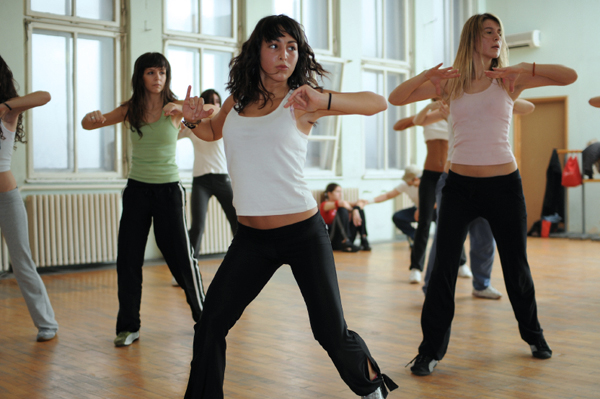
Within the gym, there are numerous ways to exercise aerobically. Before former martial arts standout Billy Blanks made Tae Bo a national exercise rage, the craze was spinning. Before that, there were step classes, and aerobic dance.
Some people look at these theme classes as gimmicky – and we suppose some of them are – but many are great ways to churn and burn in a group setting. The workouts can be quite demanding, but the group dynamic and pulsating music distracts you from the intensity of your effort. Even if you're highly motivated and work out diligently on your own, taking a class is a fun way to diversify your routine. If you're someone who needs to be motivated, these classes may be just what you need.
Following, we will discuss briefly the various forms of aerobic activities available in a majority of gyms.

Spinning Out
Spinning, which is done on an exercise bike, was developed in California by a character named Johnny G. Typically accompanied by loud funky tunes and sparkling and flashing lights, you stand and sit, spin fast and slow to the calls of your instructor. No one moves (at least not forward) but you get an incredible workout. Because each rider adjusts the tension on his/her own bike, spinning can accommodate a diverse group of participants.
In case you think that spinning is just for Jane Fonda types, here's an interesting case study. This past winter, rather than fighting the nasty New York winter, Jonathan and several of his cycling teammates regularly took spin classes with cyclist Kirk Whiteman, a former world champion sprinter whose thighs resemble oak trees. If their early season race results are any indication, those wintertime sweat-fests did the trick.
How to Gain Energy and Feel Stronger
As you grow older, an active lifestyle is more important than ever. Regular exercise can help boost energy, maintain your independence, and manage symptoms of illness or pain. Exercise can even reverse some of the symptoms of aging. And not only is exercise good for your body—it’s also good for your mind, mood, and memory. Whether you are generally healthy or are managing an illness, there are plenty of ways to get more active, improve confidence, and boost your fitness

Senior Exercise and Fitness Tips

Exercise is the key to healthy aging
Have you heard exercise is important for older adults, but don’t know where to begin? You’re not alone. Many seniors feel discouraged by fitness barriers, such as chronic health conditions or concerns about injury or falls. If you’ve never exercised before, you may not know where to begin. Or maybe an ongoing health problem or disability is keeping you from getting active. Perhaps you think you’re too old or frail.
The truth is that you can’t afford not to get moving. Exercise is the key to staying strong, energetic, and healthy as you get older.
No matter your age or your current physical condition, you can benefit from exercise. Reaping the rewards of exercise doesn’t require strenuous workouts or trips to the gym. It’s about adding more movement and activity to your life, even in small ways. Whether you are generally healthy or are managing an illness—even if you’re housebound—there are many easy ways to get your body moving and improve your health.

5 Myths about Exercise and Older Adults
Myth 1: There’s no point to exercising. I’m going to get old anyway.
Fact: Exercise and strength training helps you look and feel younger and stay active longer. Regular physical activity lowers your risk for a variety of conditions, including Alzheimer’s and dementia, heart disease, diabetes, colon cancer, high blood pressure, and obesity.
Myth 2: Elderly people shouldn’t exercise. They should save their strength and rest.
Fact: Research shows that a sedentary lifestyle is unhealthy for the elderly. Period. Inactivity often causes seniors to lose the ability to do things on their own and can lead to more hospitalizations, doctor visits, and use of medicines for illnesses.
Myth 3: Exercise puts me at risk of falling down.
Fact: Regular exercise, by building strength and stamina, prevents loss of bone mass and improves balance, actually reducing your risk of falling.
Myth 4: It’s too late. I’m already too old to start exercising
Fact: You’re never too old to exercise! If you’ve never exercised before, or it’s been a while, start with light walking and other gentle activities.
Myth 5: I’m disabled. I can’t exercise sitting down.
Fact: Chair-bound people face special challenges but can lift light weights, stretch, and do chair aerobics to increase range of motion, improve muscle tone, and promote cardiovascular health.

The whole-body benefits of exercise for seniors
As you age, regular exercise is more important than ever to your body and mind.
Physical health benefits of senior exercise and fitness
- Exercise helps seniors maintain or lose weight. As metabolism naturally slows with age, maintaining a healthy weight is a challenge. Exercise helps increase metabolism and builds muscle mass, helping to burn more calories. When your body reaches a healthy weight, overall wellness improves.
- Exercise reduces the impact of illness and chronic disease. Among the many benefits of exercise for seniors include improved immune function, better heart health and blood pressure, better bone density, and better digestive functioning. Seniors who exercise also have a lowered risk of several chronic conditions including Alzheimer’s disease, diabetes, obesity, heart disease, osteoporosis, and colon cancer.
- Exercise enhances mobility, flexibility, and balance in seniors. Exercise improves your strength, flexibility and posture, which in turn will help with balance, coordination, and reducing the risk of falls. Strength training also helps alleviate the symptoms of chronic conditions such as arthritis.
Mental health benefits of senior exercise and fitness
- Exercise improves your sleep. Poor sleep is not an automatic consequence of aging and quality sleep is important for your overall health. Exercise often improves sleep, helping you fall asleep more quickly and sleep more deeply.
- Exercise boosts mood and self-confidence. Endorphins produced by exercise can actually help you feel better and reduce feelings of sadness or depression. Being active and feeling strong naturally helps you feel more self-confident and sure of yourself.
- Exercise is good for the brain. Exercise benefits regular brain functions and can help keep the brain active, which can prevent memory loss, cognitive decline, and dementia. Exercise may even help slow the progression of brain disorders such as Alzheimer’s disease.

Senior exercise and fitness: Tips for getting started safely
Committing to a routine of physical activity is one of the healthiest decisions you can make. Before you get moving, though, consider how best to be safe.
- Get medical clearance from your doctor before starting an exercise program, especially if you have a preexisting condition. Ask if there are any activities you should avoid.
- Consider health concerns. Keep in mind how your ongoing health problems affect your workouts. For example, diabetics may need to adjust the timing of medication and meal plans when setting an exercise schedule. Above all, if something feels wrong, such as sharp pain or unusual shortness of breath, simply stop. You may need to scale back or try another activity.
- Start slow. If you haven’t been active in a while, it can be harmful to go “all out.” Instead, build up your exercise program little by little. Try spacing workouts in ten-minute increments twice a day. Or try just one class each week. Prevent crash-and-burn fatigue by warming up, cooling down, and keeping water handy.
- Commit to an exercise schedule for at least 3 or 4 weeks so that it becomes habit, and force yourself to stick with it.
- Stay motivated by focusing on short-term goals, such as improving your mood and energy levels and reducing stress, rather than goals such as weight loss, which can take longer to achieve.
- Recognize problems. Exercise should never hurt or make you feel lousy. Stop exercising immediately and call your doctor if you feel dizzy or short of breath, develop chest pain or pressure, break out in a cold sweat, or experience pain. Also stop if a joint is red, swollen, or tender to touch.

Senior fitness and exercise: Tips for building a balanced exercise plan
Staying active is not a science. Just remember that mixing different types of exercise helps both reduce monotony and improve your overall health. Here is an overview of the four building blocks of senior fitness and how they can help your body.
The 1st building block of senior fitness: Cardio endurance exercise
- What is it: Uses large muscle groups in rhythmic motions over a period of time. This type of exercise increases your body’s ability to deliver oxygen and nutrients to tissues and to remove waste over sustained periods of time. Cardio workouts get your heart pumping and you may even feel a little short of breath.
- Why it’s good for seniors: Helps lessen fatigue and shortness of breath. Promotes independence by improving endurance for daily activities such as walking, house cleaning, and errands. Cardio includes walking, stair climbing, swimming, hiking, cycling, rowing, tennis, and dancing.
The 2nd building block of senior fitness: Strength training
- What is it: Builds up muscle with repetitive motion using weight or external resistance from body weight, machines, or elastic bands.
- Why it’s good for seniors: Helps elderly people prevent loss of bone mass, builds muscle, and improves balance—both important in staying active and preventing risk of falling. Building up strength will help seniors stay independent and make day-to-day activities easier such as opening a jar, getting in and out of a car, and lifting objects.
The 3rd building block of senior fitness: Flexibility
- What is it: Challenges the joint’s ability to move freely through a full range of motion. Can be done through static stretches (stationary), and ballistic stretches (moving or bouncing) to keep muscles and joints supple so they are less prone to injury.
- Why it’s good for seniors: Helps body stay limber and increases range of movement for ordinary physical activities such as looking behind you while driving, tying shoes, shampooing your hair, and playing with grandchildren.
The 4th building block of senior fitness: Balance
- What is it: Maintains standing and stability under a variety of conditions including static (stationary) and dynamic (moving) balance.
- Why it’s good for seniors: Improves balance, posture, and quality of walking. Also reduces risk of falling and fear of falls. Try yoga, Tai Chi, and posture exercises to gain confidence with balance.
Types of activities that are beneficial to seniors:
- Walking. Walking is a perfect way to start exercising. It requires no special equipment, aside from a pair of comfortable walking shoes, and can be done anywhere.
Senior sports or fitness classes. Keeps motivation alive while also providing a source of fun, stress relief, and a place to meet friends.
- Water aerobics and water sports. Working out in water is wonderful for seniors because water reduces stress and strain on the body's joints.
- Yoga. Combines a series of poses with breathing. Moving through the poses works on strength, flexibility and balance. Yoga can be adapted to any level.
- Tai Chi and Qi Gong. Martial arts-inspired systems of movement that increase balance and strength. Classes for seniors are often available at your local YMCA or community center.

Senior fitness and exercise: Tips for frail or chair-bound seniors
If you are chair-bound, movement matters even more, and fitness is entirely achievable. Chair-bound seniors can reap the benefits of exercise with strength training, flexibility, and even some endurance movements. If being chair-bound has prevented you from trying exercise in the past, take heart knowing that when you become more physically active, the results will amaze you. Like any exercise program, a chair-bound fitness routine takes a little creativity and personalization.
Chair-bound Fitness: Tips for Seniors
- Strength: Use free weights (otherwise known as “dumbbells”) to do repetitive sets of lifting. Don’t have weights? Use anything that is weighted and fits in your hand, like soup cans.
- Resistance: Resistance bands are like giant rubber bands designed to give your muscles a good workout when stretched and pulled. Resistance bands can be attached to furniture, a doorknob, or even your chair. Use these for pull-downs, shoulder rotations, and arm and leg-extensions.
- Flexibility: By practicing mindful breathing and slowly stretching, bending, and twisting, you can limber up and improve your range of motion. Some of these exercises can also be done lying down. Ask your doctor or search online for chair-yoga possibilities.
- Endurance: Check out pool-therapy programs designed for wheelchair-bound seniors. Also, wheelchair-training machines make arm-bicycling and rowing possible. If you lack access to special machines or pools, repetitive movements (like rapid leg lifts or sitting pushups) work just as well to raise your heart rate.

Senior fitness and exercise: Tips for getting more active—and liking it
If you dread working out, it’s time for a mental makeover. Consider physical activity part of your lifestyle instead of a bothersome task to check off your “to do” list. There are plenty of ways for seniors to make exercise a pleasurable part of everyday life—here are just a few.

Choose activities and exercises you enjoy
- Think about activities that you enjoy and how you can incorporate them into an exercise routine.
- Listen to music while lifting weights
- Window shop while walking laps at the mall
- Get competitive while playing tennis
- Take photographs on a nature hike
- Meet new people at a yoga class
- Watch a favorite movie while on the treadmill
- Chat with a friend while walking, stretching, or strength training
Find easy ways to add more physical activity to your day
Being active doesn’t have to be limited to your workout times. There are plenty of ways to become more active as you go about your day.
- Active on the go: Always choose stairs over the elevator, park at the far end of the parking lot when arriving at appointments and meetings, walk down every isle of the grocery store while shopping, practice balancing skills while standing in line, do neck rolls while waiting at a stoplight.
- Active at home: Do a set of wall pushups while waiting for water to boil, vigorously vacuum, tend to the garden, sweep the sidewalk, rake leaves, lift weights while watching the news, try toe-raises while talking on the phone, do knee bends after sitting for a long period of time.
Focus on the benefits in your daily life
The most rewarding part of beginning a fitness routine is noticing the difference it makes in the rest of your life. Even if you begin exercising with a few simple stretches while seated or a short walk around the block, you’ll notice an improvement in how you feel as you go about your day.
- House cleaning, gardening, shopping, and errands. Want to feel less winded while vacuuming or rushing to and from appointments? Doing just 15 to 20 minutes of heart-healthy cardio each day, such as walking, biking, swimming, or water aerobics will help give you the stamina you need.
- Lifting grandchildren, carrying groceries, household chores. Building muscle mass a few times each week through weight lifting, resistance exercises, and nautilus machines will help give you more strength.
- Tying shoes, looking behind you while driving, navigating steps. Incorporating basic stretching—even while seated—into your fitness routine will make the most ordinary movements easier. Try yoga, Pilates, Tai Chi, or Qi Gong to limber up.
Exercise doesn’t have to break the bank
A senior fitness program does not depend on costly gym memberships and fancy exercise equipment. Like the best things in life, staying fit can be completely free. Work out the wallet-friendly way:
- Do neck rolls and light stretching while watching TV
- No weights? Use food cans or water bottles
- Rent exercise videos from the library
- Mow the lawn, rake leaves, and weed
- Climb stairs
- Enjoy a walk in a new park or neighborhood

Senior exercise and fitness: Tips for staying active for life
The more you exercise, the more you will reap the benefits, so it’s important to stay motivated when life’s challenges get in the way.
- Keep a log. Writing down your activities in an exercise journal not only holds you accountable, but also is a reminder of your accomplishments.
- Stay inspired. Reading health magazines or watching sports shows can help remind you how great it feels to take care of your body.
- Get support. It’s easier to keep going with support. Consider taking a class or exercising with your spouse or a buddy.
- Exercise safely. Nothing derails an exercise plan like an injury. Use common sense and don’t exercise if you are ill. Wear brightly colored clothing to be visible on the roads. When the weather brings slippery conditions, walk at a mall indoors to prevent falling.

Wednesday, April 3, 2013

Making Exercise Part of Your Everyday Life
Of all the different ways to improve your physical and mental health, exercise is one of the easiest and safest methods. It is also one of the most effective. Even a little regular exercise can help ease depression, boost energy and mood, and relieve stress. But you don't have to be a fitness fanatic to reap the benefits. No matter your age, health limitations, or fitness levels, there are enjoyable ways to use physical activity to feel better every day.

Easy Exercise 4 Tips

The life-changing benefits of exercise
Exercise is not just about aerobic capacity and muscle size. Sure, exercise improves your health and your physique, but it has even greater benefits for your energy, mood, and brainpower. A study in the ACSM Journal of Health & Fitness asked long-term exercisers (those who had been regularly exercising for an average of 13 years) what motivated them to continue exercising. Rather than being motivated by building muscle or flattening their stomachs, for example, most exercisers cited the feelings of well-being they derived from exercise, along with increased pep and energy, and how exercise helped them sleep better and made them more relaxed.
The important thing to remember is that these benefits can be achieved without spending hours pumping weights in a gym or pounding on a treadmill. Regular mild to moderate exercise can improve your life by:
- Easing stress and anxiety. A twenty-minute bike ride won’t sweep away life’s troubles, but exercising regularly helps you take charge of anxiety and reduce stress. Aerobic exercise releases hormones that relieve stress and promote a sense of well-being.
- Lifting your mood. Exercise can treat mild to moderate depression as effectively as antidepressant medication. Exercise also releases endorphins, powerful chemicals in your brain that energizes your spirits and makes you feel good.
- Sharpening brainpower. The same endorphins that make you feel better also help you concentrate and feel mentally sharp for tasks at hand. Exercise also stimulates the growth of new brain cells and helps prevent age-related decline.
- Improving self-esteem. Regular activity is an investment in your mind, body, and soul. When it becomes habit, it can foster your sense of self-worth and make you feel strong and powerful.
- Boosting energy. Increasing your heart rate several times a week will give you more get-up-and-go. Start off with just a few minutes of exercise a day, and increase your workout as you feel more energized.

Reaping the benefits of exercise is easier than you think
To reap the benefits of exercise, you don’t need to devote hours out your busy day, train at the gym, sweat buckets, or run mile after monotonous mile. You can reap all the physical and mental health benefits of exercise with 30-minutes of moderate exercise five times a week. Two 15-minute exercise sessions can also work just as well.
If that still seems intimidating, don’t despair. Even just a few minutes of physical activity are better than none at all. If you don’t have time for 15 or 30 minutes of exercise, or if your body tells you to take a break after 5 or 10 minutes, for example, that’s okay, too. Start with 5- or 10-minute sessions and slowly increase your time. The more you exercise, the more energy you’ll have, so eventually you’ll feel ready for a little more. The key is to commit to do some moderate physical activity—however little—on most days. As exercising becomes habit, you can slowly add extra minutes or try different types of activities. If you keep at it, the benefits of exercise will begin to pay off.
Moderate exercise means two things:
- That you breathe a little heavier than normal, but are not out of breath. For example, you should be able to chat with your walking partner, but not easily sing a song.
- That your body feels warmer as you move, but not overheated or very sweaty.

Do I need different types of exercise?
While any kind of exercise offers tremendous health benefits, different types of exercise focus more on certain aspects of your health. You can concentrate on one type of exercise or mix them up to add variety to your workouts and broaden the health benefits.
Aerobic activities like running, cycling, and swimming strengthen your heart and increase your endurance.
Strength training like weight lifting or resistance training builds muscle and bone mass, improves balance and prevents falls. It’s one of the best counters to frailty in old age.
Flexibility exercises like stretching and yoga help prevent injury, enhance range of motion, reduce stiffness, and limit aches and pains.

1- Easy exercise tip 1: Move more in your daily life
Even if you don’t have a 15 or 30 minute window to dedicate to yoga or a bike ride, that doesn’t mean you can’t add physical activity to your day. If you're not ready to commit to a structured exercise program, think about physical activity as a lifestyle choice rather than a single task to check off your to-do list. Look at your daily routine and consider ways to sneak in activity here and there. Even very small activities can add up over the course of a day.
- In and around your home. Clean the house, wash the car, tend to the yard and garden, mow the lawn with a push mower, sweep the sidewalk or patio with a broom.
- At work and on the go. Look for ways to walk or cycle more. For example, bike or walk to an appointment rather than drive, banish all elevators and use the stairs, briskly walk to the bus stop then get off one stop early, park at the back of the lot and walk into the store or office, take a vigorous walk during your coffee break. Walk while you’re talking on your cell phone.
- With friends or family. Walk or jog around the soccer field during your kid’s practice, make a neighborhood bike ride part of weekend routine, play tag with your children in the yard or play exercise video games. Walk the dog together as a family, or if you don’t have your own dog, volunteer to walk a dog from a shelter. Organize an office bowling team, take a class in martial arts, dance, or yoga with a friend or spouse.
- While watching TV. Gently stretch while watching your favorite show, do push-ups, sit-ups or lift light weights during the commercial breaks—you'll be amazed at how many repetitions you can fit in during the commercials of a half hour show! Better still, once a week turn off the TV and take a walk outside instead.

2- Easy exercise tip 2: Start slowly—a little is better than nothing
When we decide to begin exercising, many of us will rush out and join a gym or buy costly exercise equipment with a vow to working out every day. We may go to the gym once or twice, use the equipment a couple of times and then quickly lose motivation. The gym membership gathers dust and the exercise equipment is confined to the back of a closet.
Exercise doesn’t need to be such an all or nothing commitment. If you haven’t exercised before or you’ve tried an exercise program in the past and been unable to stick with it, it’s important not to set unrealistic goals. Committing to exercise for an hour a day in a gym may be too challenging at first, whereas committing to 10 minutes just three or four times a week is more manageable. Once these short windows of activity become a habit and you start experiencing the benefits, it’s easier to progress to the next level.
Tips for getting started in an exercise program:
- Take it slow. Start with an activity you feel comfortable doing, go at your own pace, and keep your expectations realistic. For example, training for a marathon when you’ve never run before may be a bit daunting, but you could give yourself the goal of participating in an upcoming 5k walk for charity.
- Focus on short-term goals, such as improving your mood and energy levels and reducing stress, rather than goals such as weight loss or increased muscle size, as these can take longer to achieve.
- Make exercise a priority. It’s one of the best things you can do for your physical and mental health and by making exercise a priority in your life, you’ll be more likely to stick with it over the long-term. If you have trouble fitting exercise into your schedule, consider it an important appointment with yourself and mark it on your daily agenda. Commit to an exercise schedule for at least 3 or 4 weeks so that it becomes habit, and force yourself to stick with it. Even the busiest amongst us can find a 10-minute slot to pace up and down an office staircase or take the dog for a walk.
- Go easy on yourself. Do you feel bad about your body? Instead of being your own worst critic, try a new way of thinking about your body. No matter what your weight, age, or fitness level, there are others like you with the same goal of exercising more. Try surrounding yourself with people in your shoes. Take a class with others of a similar fitness level. Set easy goals for yourself to start with. Accomplishing even the smallest fitness goals will help you gain body confidence.
- Expect ups and downs. Don’t be discouraged if you skip a few days or even a few weeks. It happens. Just get started again and slowly build up to your old momentum.
Safety tips for beginning exercisers:
- If you’ve never exercised before, or it’s been a significant amount of time since you’ve attempted any strenuous physical activity, keep in mind the following general health precautions:
Get medical clearance. If you have special health issues such as an existing heart condition or high blood pressure, talk with your doctor or health practitioner and let him or her know your plans.
- Stretch. No matter what form of exercise you choose, you’ll benefit from adding stretching exercises to gain flexibility and range of motion. Stretching to warm up and cool down is the best form of injury-prevention for new exercisers.
- Drink plenty of water. Your body performs best when it’s properly hydrated. Failing to drink enough water when you are exerting yourself over a prolonged period of time, especially in hot conditions, can be dangerous.

3- Easy exercise tip 3: Make exercise fun
You are more likely to exercise if you find enjoyable, convenient activities. Give some thought to your likes and dislikes, and remember that preferences can change over time.
Pair an activity you enjoy with your exercise
There are numerous activities that qualify as exercise. The trick is to find something you enjoy that forces you to be active. Pairing exercise with another activity makes it easier and more fun. Simple examples include:
- Take a dance or yoga class.
- Blast some favorite music and dance with your kids.
- Make a deal with yourself to watch your favorite TV shows while on the treadmill or stationary bike.
- Workout with a buddy, and afterwards enjoy coffee or a movie.
- Enjoy outdoor activities such as golf, playing Frisbee, or even yard work or gardening.
Make exercise a social activity
Exercise can be a fun time to socialize with friends and working out with others can help keep you motivated. For those who enjoy company but dislike competition, a running club, water aerobics, or dance class may be the perfect thing. Others may find that a little healthy competition keeps the workout fun and exciting. You might seek out tennis partners, join an adult soccer league, find a regular pickup basketball game, or join a volleyball team.
For many, a workout partner can be a great motivator. For example, if you won’t get out of bed to swim yourself, but you would never cancel on a friend, find a swim buddy.

4- Easy exercise tip 4: Stay motivated
Making lifestyle and behavior changes is not easy. It takes time and effort and you’ll likely suffer some setbacks along the way. But over time, as you continue to exercise, you’ll start to reap the physical and mental health benefits and improve your physical performance. You’ll be able to exercise longer and harder and have the confidence to try new activities.
Of course, no matter how much you enjoy an exercise routine, you may find that you eventually lose interest in it. That’s the time to shake things up and try something new, add other activities to your exercise program, or alter the way you pursue the exercises that have worked so far.
Set yourself goals and rewards
Rewarding yourself for reaching an exercise goal is one of the best ways to stay motivated. Set an achievable goal regarding your participation and effort, not necessarily how much weight you can lift, miles you can bike, or pounds you can lose lost. If you stumble in your efforts, regroup and begin again. Reward yourself when you reach your goals—a new pair of shoes, a dinner out, whatever works to motivate you.
Other ways to keep your exercise program going
- Be consistent. Make your workouts habitual by exercising at the same time every day, if possible. Eventually you will get to the point where you feel worse if you don’t exercise. That dull, sluggish feeling fitness buffs get when they don’t work out is a strong incentive to get up and go.
- Record your progress. Try keeping an exercise journal of your workouts. In a matter of months, it will be fun to look back at where you began. Keeping a log also holds you accountable to your routine.
- Keep it interesting. Think of your exercise session as time to yourself. Enjoy that time by listening to music, chatting with friends, and varying locations. Exercise around natural beauty, new neighborhoods, and special parks.
- Above all, avoid workout boredom by mixing it up and trying new routines.
- Spread the word. Talking to others about your fitness routines will help keep motivation strong and hold you accountable to your exercise program. You’ll be delighted and inspired hearing ways your friends and colleagues stay active and on track. Who knows, you might even convince someone else to try to be more active.
- Get inspired. Read a health and fitness magazine or visit an exercise website and get inspired with photos of people being active. Sometimes reading about and looking at images of people who are healthy and fit can motivate you to move your body.

Tuesday, April 2, 2013

Slimming down with Pilates doesn't work the same way for everyone. Discover the best Pilates for weight loss and find out why these exercises work better for some.
Pilates gets a lot of praise for some as a great way to lose weight, but this exercise philosophy was not designed as a weight loss plan. Check out a few exercises that actually work and discover why Pilates for weight loss isn't an option for everybody.

Pilates for Weight Loss: Slimming Down with Pilates

Slim Down with Pilates: Myth or Reality?
A lot of people lose weight with Pilates, but since this type of exercise isn't as vigorous as cardio, it may burn less calories. If you decide to slim down with Pilates, you should first consider your lifestyle. Are you an active person that already does moderate semi-regular exercise? Pilates works best for people who are giving up a sedentary lifestyle and can provide the most weight loss for heavier people. Since Pilates' main goal is strengthening the core, it's probably not the easiest way to lose a few pounds if you're already fit.
Get a 9 inch inflated ball, an exercise mat and try these Pilates exercises for weight loss that work better than most.

Criss Cross
Start by lying down with your knees bent, your soles on the mat, your hands behind your head and the exercise ball between your knees. Lift your left elbow and shoulder off the mat, twisting your body and keep the position for 3 breaths. Repeat for the other side and make sure you're moving from the ribcage, not stretching your neck.

Half Rolldowns
Place the ball between your bent knees as you sit upright on the mat with your feet flat on it. Move your head and shoulders forward to make a C shape with your spine while squeezing the ball between your knees. Scoop your abdomen in and move your hands along your legs until you're halfway down, then return to the upright position.

Bridge Squeezes
Lying down on the mat with your knees bent and your feet and arms flat on it. Have the small exercise ball between your knees. Start by lifting your pelvis, then your lower back until your body is in a straight line from your knees to your neck. Once you're in position, squeeze the ball 5 times, then slowly return to the starting position and repeat.

Pilates-Cardio Fusion
If you're looking for the best fitness option to lose weight, you may not slim down with Pilates as fast as you'd like. Try a fusion workout that incorporates Pilates into fat-burning exercises and use the mat less.
You don’t need a treadmill to control your body weight, strengthen your bones and muscles: with the best cardio workouts you will burn more calories and stay fit.
Cardiovascular exercises, simply called cardio workouts, are activities that get your heart beating faster, increasing your breathing rate. Your muscle activity and energy need increase during cardio workouts. To provide more oxygen and nutrients to your muscles, your heart rate increases the speed blood flow, making your respiratory rate rise while removing carbon dioxide. In addition, the best cardio workouts will get you all sweaty, removing excess heat produced by your muscle activity.
Best Cardio Workouts

High-Intensity Cardio Workouts
High-intensity cardio workouts help you lose fat and burn calories at a faster pace. For example, high-impact aerobics can burn up to 511 calories an hour for a 160-lb. person. Jogging is another good choice, burning 584 calories an hour. Some of the best high-intensity cardio workouts include in-line skating and tae kwon do which burn 730 calories an hour. Discuss with your doctor about an appropriate activity level for burning midsection fat.

Interval Training
If high-intensity cardio workouts are too difficult, use an interval training workout. Select two types of activities. The first cardio workout should be moderate, such as walking or jumping rope at a slow pace. After a few minutes, switch to an intense activity, such as jogging or mountain climbers at a fast pace. Get the best cardio workouts by rotating between activities for your entire training session.

Circuit Training
Circuit training is the best cardio workout approach as it allows you to burn 30 percent more calories than regular strength-training sessions. Start out with a midsection toning exercise, such as abdominal crunches. Move to an intense cardio workout, such as jogging or jumping jacks, for a few minutes. Switch between toning exercises and high-intensity cardio activity to make the best cardio workouts.

Cardio Frequency
For best results, plan at least 30 minutes of cardio workouts daily. If you have a hard time scheduling a 30 minute cardio workout at a time, break your sessions into shorter intervals. For example, work out for 15 minutes in the morning and evening.
You can also build the best cardio workout routine to include 20 minutes per day, five days per week: jogging or running or focus on less-intense exercises such as water aerobics, light bicycling and ballroom dancing, which can also be fun with your partener or a group of friends.
Lub Dub: Heart Rates
To get a good cardiovascular workout, it's helpful to know how hard to push yourself. (Going too slow loses the training benefit; training too hard is often unnecessary, counterproductive or even dangerous.) As a result, the best way to monitor your pace is by figuring out your heart rate and knowing at what level of exertion to train.

Read more on FamilyEducation: http://life.familyeducation.com/exercise/fitness/35981.html#ixzz2PMwtp68c
Aerobic Exercise Training part 2

Although it initially may seem complicated, figuring out your heart rate while you exercise is quite easy. In fact, before you know it, you'll be monitoring your heart rate like Jonathan. A number cruncher at heart, he often checks his heart rate after a shower, while watching a scary movie, or when waiting in line at the bank. (Please don't ask why he does this. While he's extremely knowledgeable on all aspects of fitness, he is rather, how shall we say, unique.)

To make the heart rate number crunching game worth your while, you'll need to know a few basic things.
To maximize weight loss, you want to exercise at 60 to 75 percent of your maximal heart rate (MHR).

For cardiovascular fitness, you want to increase this to about 85 percent of your MHR. Elite athletes, like Olympic sprinters, often push the envelope and exercise at nearly 100 percent of their MHR.

Figure It Out
The simplest way to determine whether you're exercising aerobically or anaerobically is the talk test. If you can carry on a conversation with your training mate while you're jogging around the park, you're training aerobically; you may be huffing and puffing, but you can be understood and respond without gasping for breath. If your partner asks, "How ya doin'?" and you reply like a breathless mugger wearing a ski mask, well, you're in the anaerobic range.

You can also use what is called your rate of perceived exertion (RPE). This is a chart that attempts to quantify for you how hard you're working when you're exercising. This is very often used with patients who are participating in cardiac rehabilitation after suffering a heart attack or cardiovascular surgery. The RPE scale is imperfect because it's so subjective, but it can be a useful tool to go along with monitoring your heart rate.

The following is the scale for rate of perceived exertion (RPE):

0 Nothing at all
0.5 Very, very weak
1 Very weak
2 Weak
3 Moderate
4 Somewhat strong
5 Strong
6 Strong
7 Very strong
8 Very strong
9 Very strong
10 Very, very strong
Maximal
If you don't have anyone by your side to talk to and fear being considered a nut job carrying on a one-sided conversation, there are two formulas that you can use to figure out what your target heart rate should be during your workout.
The first formula to figure out your MHR is as follows:

220 minus your age.
Take that figure and multiply it by 60 percent. This represents the low end of your target heart rate.
Multiply your predicted maximum heart rate by 85 percent. This is the high end of your target heart rate.
The second, more accurate way to figure your target heart rate during aerobic activity is called the Karvonen formula. First we need to record your resting heart rate (RHR). To get an accurate reading, take your pulse first thing in the morning before you get out of bed on three consecutive days. Average the three, and take that to be your resting heart rate. Here's the rest of the equation:
220 minus your age is your predicted maximum heart rate (MHR).
MHR minus your resting heart rate (RHR).
Multiply that number by 60 percent and 85 percent.
Add your RHR to each of these values for the low end and high end of your target heart rate zone.
Sounds complicated but it's not. For example: Deidre Johnson-Cane, age 39 (and holding). Resting heart rate, 72. Here's how she would figure out her target heart rate

220 - 39 = 181
181 - 72 = 109
109 X .60 = 65.4
72 + 65.4 = 137
While it may come as a revelation to most of you, it's a misconception that aerobic exercise tones and firms muscle. Aerobic exercise helps you to decrease your level of body fat, which helps improve the muscle definition by thinning out the layer of fat that obscures the muscles, but weight training is what makes the muscles worth looking at. Theoretically, you can be thin from doing tons of aerobic exercises, yet still be flabby and/or weak. In order to achieve a balanced physique, you must include both aerobics and weight training in your routine.

Aerobic Exercise Training part 1

Take Deidre's early foray into the world of endorphins. She started off doing aerobics without weight training; then weight training without aerobics. Next she did both, though she paid no attention to nutrition. Finally, she hit pay dirt when she combined aerobic exercise, weight training, and proper nutrition. Not only did she look strong, lean, and muscular, she felt great as well. (It was only after she'd been competing as a powerlifter for several years that her body said, "No more!")

Unlike weight lifting, there are an infinite number of aerobic activities that one can choose from: cross-country skiing, swimming, in-line skating, hiking, running, cycling (on- or off-road), stair climbing, and walking. Given this wide range of activities, almost anyone who enjoys working up a sweat can find something he or she derives joy from.

This isn't to suggest you have to become a marathon man like Joe or Jonathan. Consider one of Deidre's friends who would rather have rusty tacks driven under her fingernails than exercise aerobically indoors. Instead of making it a dreaded chore, she cycles or blades from her apartment in Brooklyn to her office in Manhattan and back several times a week. Integrating her working out into her workday leaves her feeling fit, virtuous, and on time. She's lucky enough to have access to a shower at her job, and brings a stack of work clothes in every Monday.

Deidre, on the other hand, prefers doing her aerobic workouts indoors rather than dealing with traffic, unruly dogs, and/or the aggressive cyclists one often finds in Brooklyn's Prospect Park. (It's bad enough that she lives with an aggressive cyclist.) Because she is basically a fast-twitch muscle person – no genetic predisposition to endurance in that muscular body – long periods of aerobic activity are not her idea of fun. In turn, unless she's jogging through a flowery meadow to soothe her urban soul, she'd just as soon escape to a treadmill in the gym and grind away as she listens to her Walkman.

Jonathan is another case study. He'll exercise wherever he can find pavement, a treadmill, or virtually any piece of aerobic exercise equipment. Tell him you have a new machine that works your anterior hip abductors called a floppy-loop, and he's sure to give it a try. He'll train in any kind of weather and at any time of the day or night. He loves it when it's 90 degrees; he loves it when it's raining. Call him noble, call him maladjusted, or just call him a true exercise junkie.

Joe is in the Jonathan camp. However, unlike Jonathan, who sinks even looking at water, you'll find Joe wherever kayaks lurk. He also has a penchant for climbing mountains and/or running or biking on trails. By the way, did we mention snowshoe marathons and winter triathlons? In fact, pick a cardio exercise that is long, hard, or stupid and he's generally game. (In fact, on Jonathan's insistence he trained for and competed on the Concept II rowing machine in an indoor regatta known as The St. Valentine's Day Massacre.)

Before we continue, let's define what we mean by aerobic exercise for adequate cardiovascular fitness and weight loss. This is any activity that sustains an elevated heart rate for at least 20 minutes, preferably at least three or four times per week. Once you are comfortably able to sustain 20 to 30 minutes of a CV activity, try to extend your aerobic exercise session to 45 minutes. Of course, don't try to do this all at once. Rather, up the ante five minutes per week. What we really hope to avoid is you attempting more than you can handle at one time. That's one way people get frustrated and stop.

Monday, March 4, 2013

Aerobic exercises are the small and the best ways that truly increase the strength of heart and lungs. Though there are many people who aren't sure to sign up and get swinging to the beat. It is said that aerobics offers countless ways to build up cardiovascular resiliency, as well as a few extra benefits that will help you.

Aerobic Cardio Exercises: Small way to the Fitness

Here are some benefits of Aerobic Exercise:
1. Aerobics exercises helps in shaping and toning mussels of your body in an easy and smooth way by which the muscles across the body become solid and toned.
2. This action helps the heart pumping without enlarging any one particular muscle group in the body. This allows you to develop your cardiovascular strength without having to worry about building too much muscle in one part of your body, as is the case with jogging and leg muscles.
3. Another benefit of aerobic exercise is that they can be done anywhere. This is one of the best appeals of aerobics. It is a very minimalist activity, requiring no more than a few square feet of space to maneuver in.
4. And one last thing: aerobics is one of the best ways to start the day or wind down at night. Sweating it up has a revitalizing effect, which both energizes and relaxes the exerciser. You feel joy while doing this and get the complete health.
5. Aerobic Cardio exercises spreads of mussels’ strain thought out the body so it stains the mussels throughout the body.
6. Jogging puts an incredible amount of strain on the feet and legs, and the jolts on the bones do not help either. This strain will eventually wear out the joints and ligaments of the body, causing complications for people - especially those with heavy builds.
7. Aerobics involves moving everything in the body, from the arms to the hips to the legs to the toes. This then spreads the strain evenly across the body, without the sharp increases of pressure like that of jogging or jumping rope.
8. The rhyme was just a coincidence, but the point is there. You do not need a lot of fancy gadgets or a wide, open space to properly do aerobics. A Home Gym or a couple of sessions in your local fitness center will be more than enough to effectively do aerobics.
9. Besides, the only other Cardio exercise that will tone the body's muscles like aerobics does is swimming, but not everyone has access to a large pool to use at their leisure. Most aerobics only need a mat or a ball, while some aerobic exercises need nothing at all.

Saturday, March 2, 2013

Aerobics Cardio Exercises are various in numbers and you can choose one of them according to your choice, which is their best part. You can simply choose one or more that you can do every day or every other day.

Some simple Aerobics Cardio exercises

Here are some simple and best choices for cardio/aerobic exercise:

1. Use bike. Bike either outdoors on a street bike or mountain bike or indoors on a stationary bike. It's terrific for low-stress, high-intensity aerobic fitness. Your only cost is the cost of your equipment—a stationary bike or one for the outdoors.
2. Join fitness classes as a vast variety of aerobic fitness classes are available: step classes, aerobic dancing classes, spinning classes, power pump classes, and classes like Jazzercise. Fitness classes are widely available at health clubs, studios, and local recreation centers.
3. Use cardio equipment to keep yourself fit. These include treadmills, cross-country-skiing machines, elliptical trainers, stepping machines, and rowing machines. Most health and fitness facilities offer all of these and more. Find the ones you like the best and start moving. Many motels and hotels provide an exercise room with equipment, so you can exercise easily when you travel.
4. There are many good routines are available on video and DVD. You can save your time by following them. And you don’t have to go out for that.
5. Swimming is great exercise, either indoors or outdoors, and indoor pools make swimming a year-round option. The expense involved is a health club or pool membership. Swimming also elongates muscles.
6. Plain old walking can count as cardio/aerobic exercise if you can get your heart rate up to the moderate level or higher. But to do that, a casual stroll won't work. You've got to walk fast.
7. Purchase a good pair of shoes and go enjoy the outdoors. Unlike noisy gym classes, these activities give you an opportunity to take in beautiful scenery and off-street trails as you get fit and burn fat.
8. Make yourself rebounding using a mini trampoline or rebounder boots. These give you a bouncing effect—kind of like bouncing on a pogo stick. Rebounding gets your endorphins flowing faster than many other forms of cardio/aerobic exercise, and it feels great. We like the rebounding boots for both jogging outside and doing aerobic dancing indoors.